Quality Control Group
Checks materials, production methods, workmanship and key details while the unit is being made.
 Get a Quote →
Commercial inflatables depend on consistent materials, controlled construction and careful final inspection. Our process follows the whole production route instead of checking only the finished appearance.
Order details are confirmed before production, manufacturing steps are recorded and the finished inflatable is reviewed before packing. Destination-market requirements can differ, so requested standards, documentation or test needs should be discussed before production begins.
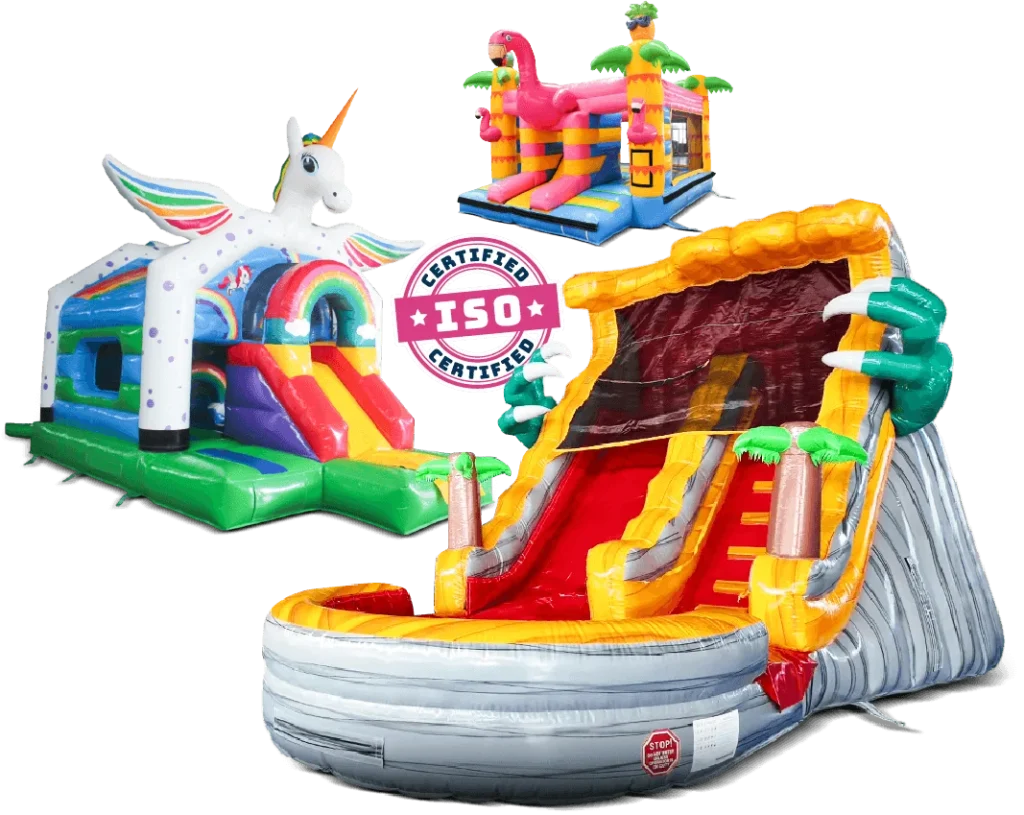
Our quality workflow separates in-process control from final order auditing. That separation helps identify issues during production and gives the completed order another review before shipment.
Checks materials, production methods, workmanship and key details while the unit is being made.
Reviews the completed order again, separates qualified and unqualified products and reports findings before delivery.
Inspection findings and after-sale feedback are returned to production so repeat orders can be more consistent.
Material and component specifications are checked before they enter production.
Quantity, size, material, color, packing, blower, shipment and special requirements are recorded clearly.
Destination requirements and requested certification standards are reviewed with the buyer.
Product design is checked for function, safety, manufacturability and efficient use of resources.
Cutting, sewing, welding, reinforcement and assembly are monitored against the agreed build method.
Production records help identify responsibility and improve consistency when an issue appears.
Inflation, structure, anchor points, netting, accessories and requested visual details are checked.
The finished unit is kept clean and packed for practical handling and transportation.
Buyer feedback is returned to the production team so repeat orders and future designs improve.
Our quality process begins with supplier and incoming-material checks, including reviewing available material or component inspection information and confirming purchased inputs against the order specification.
Confirm the material selected for the project matches the approved order and intended commercial use.
Verify the materials used for sewing or welding are appropriate for the production method.
Check mesh and protective components where the design requires visibility or user separation.
Confirm anchoring and attachment hardware before it is integrated into load-bearing areas.
Compare colors, logos, warnings and printed graphics against the approved artwork package.
Verify specified accessories are present and matched to the order before packing.
Material, technical and process checks are carried through production, including attention to sewing consistency, welding methods and the reinforcement details specified for each model.
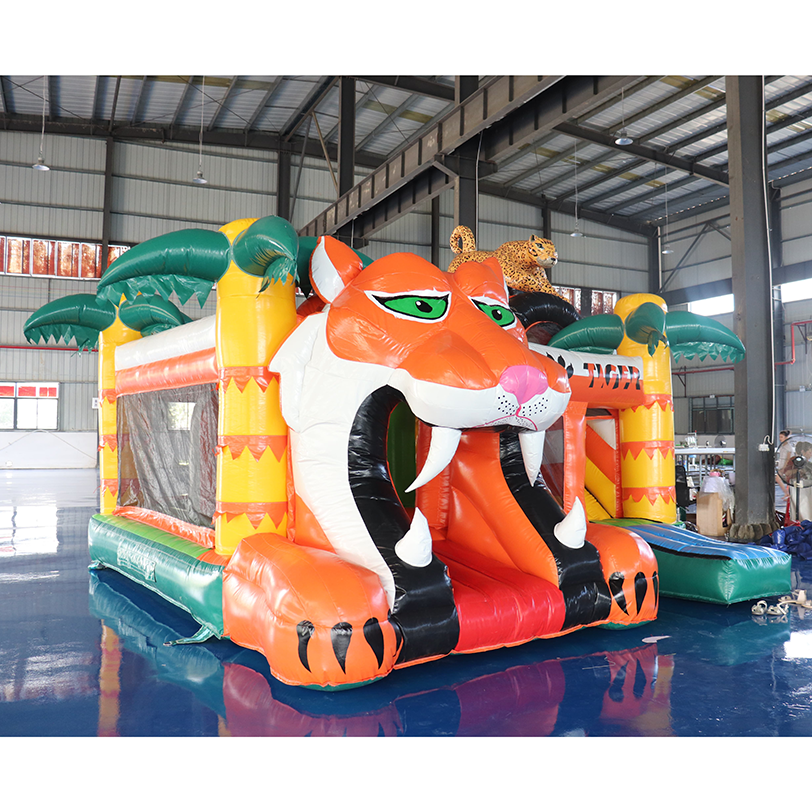
Construction methods are checked for consistency, especially around load-bearing and high-wear zones.
Anchor locations and surrounding reinforcement are reviewed against the approved product layout.
Slide and splash areas are checked for specified liner material, clean finishing and practical water use.
Mesh, openings and protective areas are reviewed where they are part of the design.
Inflation points, closures and deflation openings are checked for correct placement and operation.
Included accessories, repair materials and requested warnings or branding are confirmed before packing.
Finished-product inspection covers the completed structure, netting or protective details, fixing points and use-related load checks appropriate to the approved product.
Confirm the unit inflates into the intended form and key sections hold their shape.
Review the product under use-related loading appropriate to the approved model.
Inspect anchoring and reinforced attachment areas before shipment.
Check protective mesh and containment details where applicable.
Confirm the ordered blower, repair kit and other specified items are present and functional.
Confirm size, colors, artwork, labels and requested custom details match the approved order.
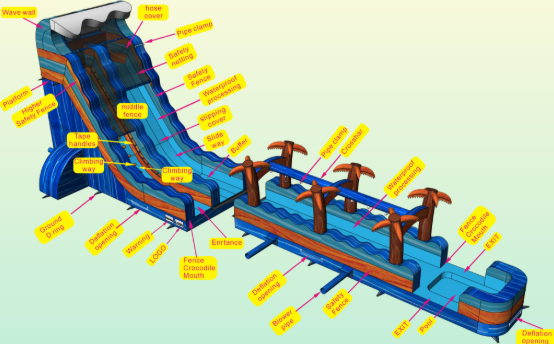
For water slides, product-specific review includes the climbing route, protective fencing or netting, slide surfaces, wet-use details, entrances and exits, blower tubes, deflation openings, ground D-rings, warnings and logos.
Finished products should be kept clean and tidy before they are folded and packed.
Packing is planned for practical handling, storage and transport.
Packing size is considered together with shipment efficiency and product protection.
Shipment planning should avoid unsuitable loading and protect the order during transport.
The packing standard is simple: keep the finished unit clean, use durable handling-friendly packing, control packed volume where practical and plan loading without creating unnecessary handling risk.
Regulations, requested standards and documentation differ by country, venue and product type. Our pre-production review includes the destination market and any legal, technical or customer-specific requirements communicated for the order.
Our QC loop continues after delivery by returning customer feedback to production. For repeat orders, recurring wear points, packing requests and operating comments can be built into the next specification.
Send a quality or service question →Safety and documentation requirements can vary. Share the destination, use case and any standard, test or certificate requested by your customer so those requirements can be reviewed before the order is released to production.
Discuss compliance requirements →